Tip jar scams that actually target creators
Updated August 6, 2026
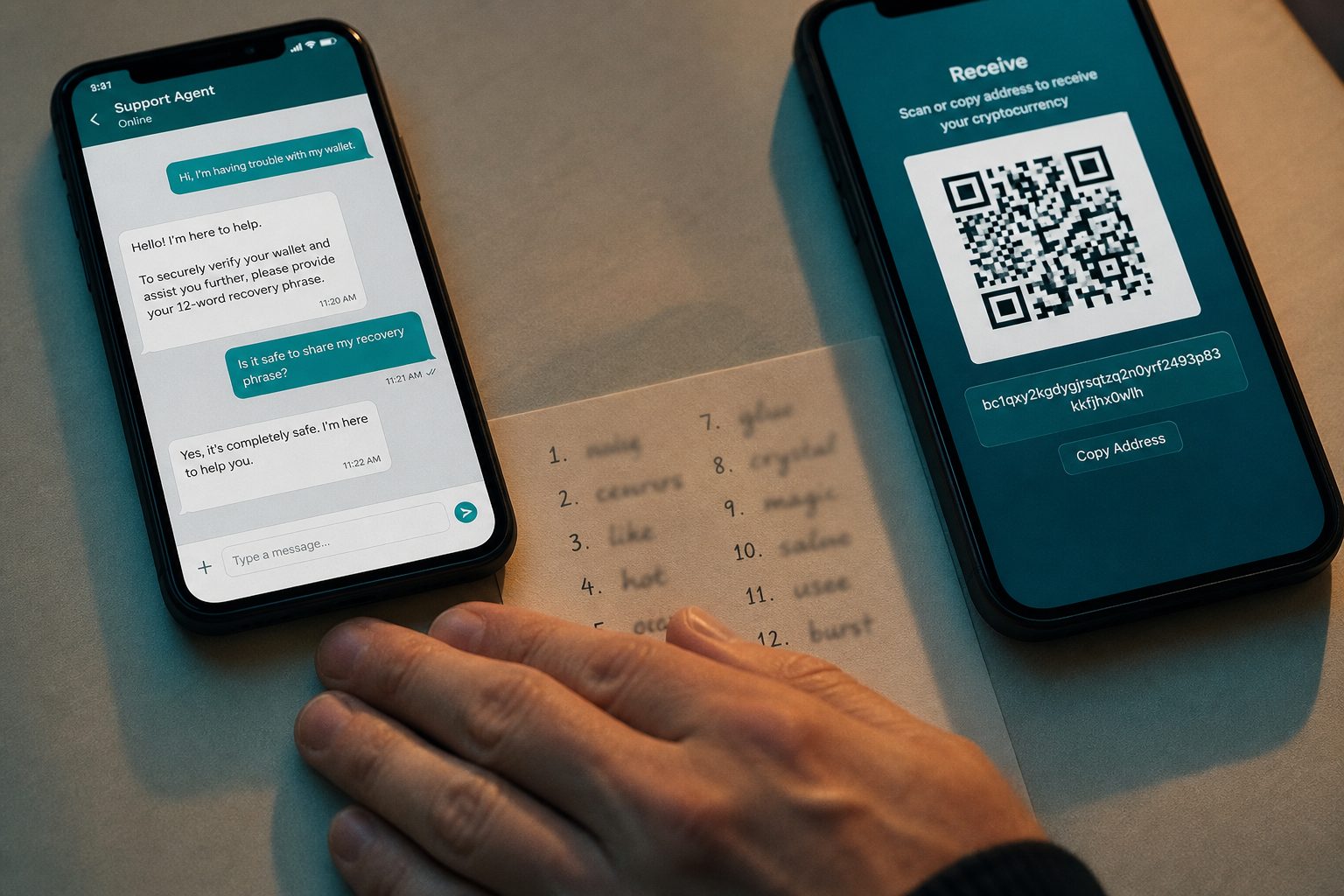
A message lands in your DMs two minutes after a stream ends: someone claims they just sent $500 and will match whatever you send next to a second address. That's not generosity. It's the fake donation-matching scam, and it's one of three schemes built specifically to hit a creator's tip jar rather than a random wallet.
The match-my-donation pitch
The mechanics are simple and old. A stranger, or a hacked account impersonating someone you'd trust, says they've already sent a large tip and will double it if you send an equivalent amount to a second wallet "to prove it's really you" or "to trigger the match." There's no verification step in real sponsorship money. Real brand deals arrive through a company email address and a contract, not a DM promising instant multiplication.
The scale this can reach isn't hypothetical. When around 130 high-profile Twitter accounts, including those of well-known public figures, were hijacked in a coordinated 2020 attack, the hijackers posted a "send bitcoin, get double back" giveaway from verified accounts. Within minutes they'd collected over $110,000 in bitcoin before the posts came down, and Coinbase said it separately blocked more than $280,000 in additional transfers headed the same way. Creators are smaller targets, but the same script runs constantly in stream chat and comment sections: a bot account claiming a "verified giveaway," a hacked account in your niche, a fake sponsor DM.
The tell is consistent. If getting paid requires you to pay first, it isn't a payout. Legitimate programs, including the USDC payouts Meta has been rolling out to creators since April 2026, land in your account without you sending anything back to "activate" them.
Clipboard malware that swaps your address mid-paste
This one doesn't need you to fall for a pitch at all. Clipper malware sits quietly on an infected machine and watches the clipboard. The moment you copy a cryptocurrency address, it silently replaces it with an address the attacker controls, and you don't find out until the paste has already gone through.
For a creator, the dangerous moment isn't receiving a tip. It's setting one up. If you copy your own wallet address to paste into a tip jar generator, a payout dashboard, or a bio link while your machine is compromised, the address that actually gets saved and published might not be yours at all. Every tip sent to that public page from then on goes straight to the attacker, quietly, for as long as it takes you to notice.
The fix is a habit, not software. After you paste any address anywhere it's about to become public, check the first six and last six characters against the source wallet before you save or publish. Our own tip jar generator is built around this exact moment: you paste your own address and it's non-custodial, nothing touches a server or a hosted account, so the only place a swap can happen is on your device, and the only defense is looking at what actually landed in the field before you hit publish.
Phishing pages that copy the platform, not the payout
The third pattern targets the login, not the wallet. A near-identical domain, an ad, or a DM link imitates the login or payout-verification screen of a tip platform, asking you to "confirm" your account or re-enter payout details. Platforms don't publish how often this happens to their creators specifically, so I won't invent a number here, but the mechanism is the standard credential-harvesting pattern used across crypto and payments generally: a page that looks right down to the logo, on a domain that's one letter off from the real one.
Creators are an easier target than average users for this specific attack because their tip jar link is already public. A scammer doesn't need to guess who has money moving through a wallet; your bio link tells them exactly where to send the fake "verify your payout" email. Type the platform's URL directly instead of clicking a link from a comment or DM, check that the domain matches exactly, and remember that no legitimate platform, and no legitimate tip jar tool, will ever ask for a seed phrase. A receiving address is public information. A seed phrase or private key never should leave your own wallet.
| Scam | What it looks like | Fastest tell |
|---|---|---|
| Donation matching | DM or comment claiming a tip was already sent, asking you to send one back to "match" or "verify" it | Any payout that requires you to pay first isn't a payout |
| Clipboard swap | The wrong address ends up saved in your tip jar or payout field after a normal copy and paste | Check the first and last six characters of a pasted address before publishing |
| Platform phishing | Lookalike domain or DM link asking you to log in or re-verify payout details | Type the platform's URL yourself; never click in from a message |
The habit that stops all three
None of this requires new software or a background in security. It requires slowing down at two specific moments: right after you paste a wallet address anywhere it's about to go public, and right before you click a link that promises money for money. Both take about five extra seconds. Both would have stopped every example above.
- After pasting any address that's about to go public, check the first and last six characters against the source wallet before you publish.
- Treat any "send money to get more back" message as a scam, no matter who it claims to be from.
- Type platform URLs yourself instead of clicking in from a comment, DM, or ad, and never enter a seed phrase anywhere.
As more payment rails show up around content, from stablecoin payouts to the per-crawl payments Cloudflare is rolling out for AI traffic, expect more fake "verify your account" pages built to match them; the steadiest baseline is still running your own tip jar the plain way, with an address only you control and nothing to log into, which is exactly what our tip jar generator is built for.
Quick answers
- What is the most common tip-jar scam?
- Someone impersonating you or 'support' and asking for a seed phrase, a 'failed tip fix', or a new address.
- Should I ever share my seed phrase?
- Never. Anyone who needs those words to 'complete a tip' is stealing the wallet.
- How do I look legitimate?
- Same handle, same domain or bio link you have used before, and a network labelled in public.