Meta pays some creators in USDC now. Here's what that actually means.
Updated August 2026
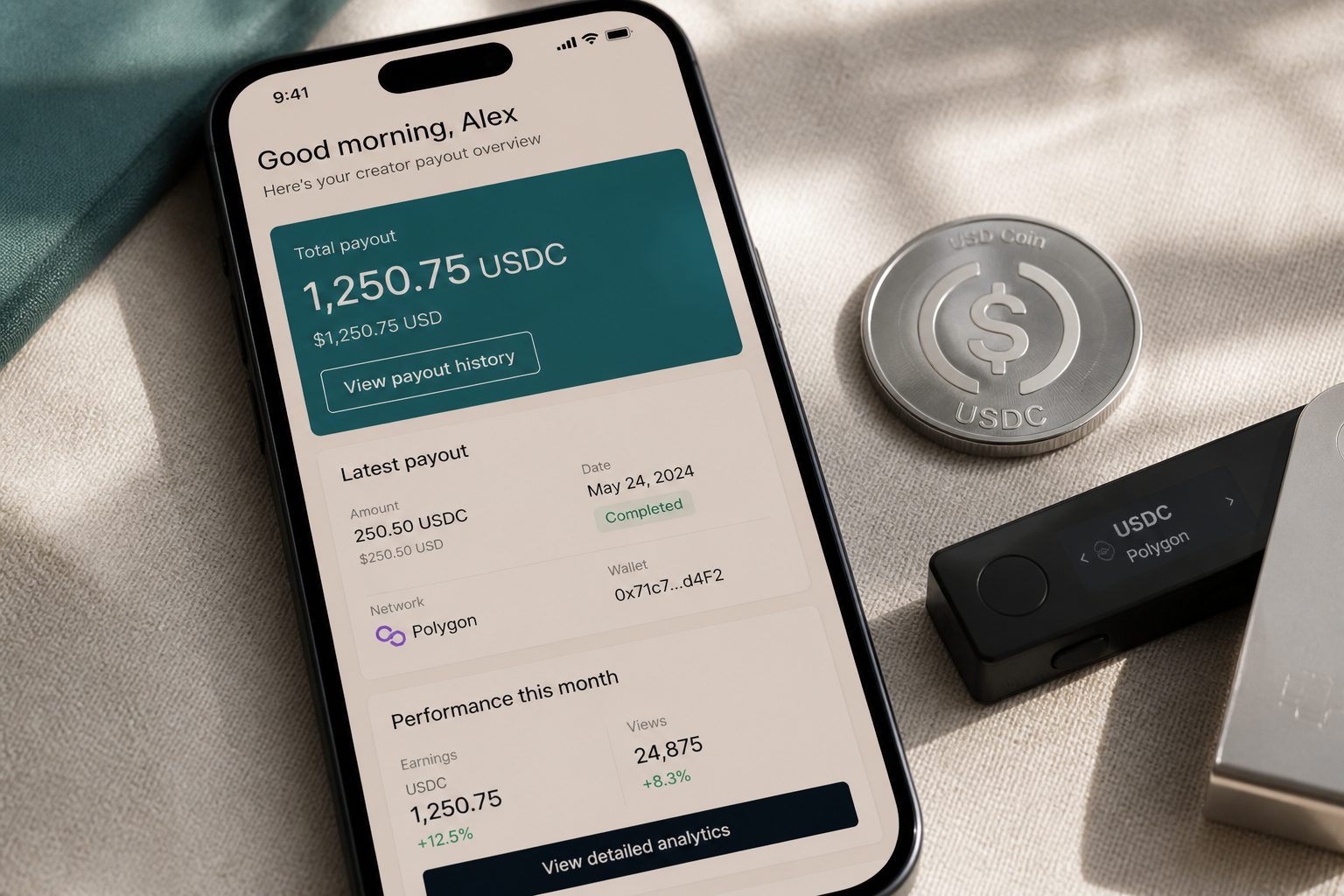
Since April 29, 2026, Meta has been paying eligible creators in USDC, a dollar-pegged stablecoin, settled through Stripe on the Polygon and Solana networks rather than a traditional bank transfer. If you're one of the creators seeing this option appear, here's what it means before you touch anything.
Why Meta is doing this
Traditional cross-border payouts are slow and expensive, especially to creators in countries with limited banking infrastructure or high remittance fees. A stablecoin payout settles in minutes instead of days and avoids much of the correspondent-banking fee stack. The rollout started narrow, with Colombia and the Philippines as the initial markets, and Meta has stated plans to expand to over 160 countries through 2026.
What USDC actually is
USDC is a stablecoin, a cryptocurrency built to hold a steady value of one US dollar, issued by Circle and backed by cash and short-term US Treasury holdings. It is not a speculative asset the way Bitcoin or Ethereum are; the entire design goal is that one USDC is worth one dollar today, tomorrow, and next year. That stability is exactly why a payout platform would choose it over a volatile cryptocurrency.
How the payout actually reaches you
Meta routes the payment through Stripe, which handles the compliance and settlement layer, and the USDC lands in a wallet tied to your account on either the Polygon or Solana network depending on the setup. You do not need to already understand blockchain networks to receive it, but you do need somewhere to hold or convert it once it arrives.
Cashing out
The simplest route is a centralized exchange that supports USDC withdrawals to your local currency and bank account. Fees and available exchanges vary heavily by country, which is part of why this rollout started in specific markets first rather than everywhere at once. If you'd rather hold the USDC or receive further payments to a wallet you fully control, our tip jar generator can build a QR code and payment link for a self-custody wallet address, though that's a separate step from Meta's own payout flow.
The tax question
A USDC payout is still income, and in most jurisdictions it's taxed the same way a bank transfer of the equivalent dollar amount would be, valued at the time you received it. The fact that it arrived as a stablecoin rather than fiat currency doesn't change that. This is not tax advice for your specific situation, and rules vary significantly by country; if this payout is meaningful money for you, it's worth five minutes with a local tax professional rather than guessing.
Reported here as of mid-2026 based on Meta and Stripe's public statements. Program details, eligible countries, and settlement networks may change; check your own creator dashboard for your current status.
Quick answers
- Does Meta pay creators in USDC?
- Eligible creators have been offered USDC payouts via Stripe on Polygon and Solana, starting with a narrow country rollout in 2026.
- Do I need a wallet?
- You need a destination that can receive USDC on the network they send. That is not the same as a Coinbase exchange login.
- How do I cash it out?
- Move USDC to an off-ramp that pays your local currency. Treat it as a payout, then as a cash-out, not as a trade.