Bitcoin Lightning tips, explained for creators
Updated August 6, 2026
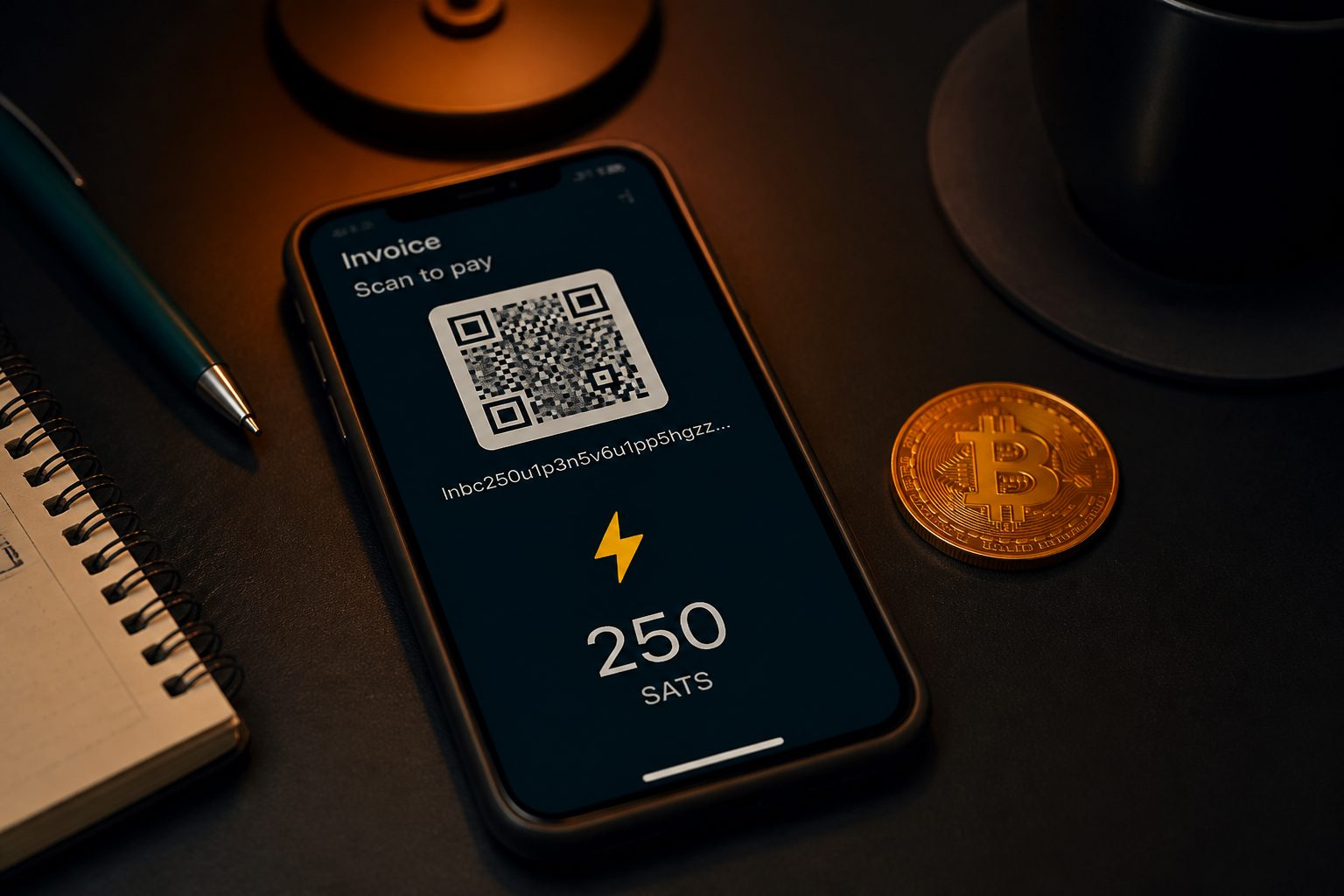
A Lightning tip isn't simply a faster Bitcoin transaction that any Bitcoin wallet can handle, and that assumption is why a lot of first-time Lightning tips never arrive. Lightning runs on its own network, built on top of Bitcoin but following different rules, and it needs its own kind of wallet and its own kind of address.
What Lightning actually does
The Bitcoin blockchain settles transactions in blocks roughly every ten minutes, and every node on the network has to agree on each one. That's fine for large, occasional payments. It's a poor fit for a reader who wants to hand a creator the equivalent of a few cents. Lightning was built to solve that specific problem. Instead of writing every payment to the blockchain, two parties open a payment channel by locking some bitcoin into a shared address, then send funds back and forth off-chain, as many times as they like, without touching the main ledger until the channel closes. Settlement inside that channel happens in milliseconds to under a minute.
Most people never open a channel themselves. They use a wallet provider that already has channels open and routes the payment through the wider network for them, using a mechanism called Hashed Time Locked Contracts, which makes sure a payment either completes in full or fails cleanly, with nothing stuck halfway.
Why it fits small tips specifically
An on-chain Bitcoin transaction carries a network fee that doesn't scale down with the payment. Send $2 or $200, and during a busy period the fee on the smaller one can eat a meaningful share of it, sometimes more than the tip itself. Lightning routing fees are usually a tiny fraction of a cent, since they're set by the intermediary nodes passing the payment along rather than by blockchain congestion. That's why Lightning caught on for tipping: platforms built on the Nostr protocol use "zaps," which are Lightning payments under the hood, because a reader can send a few sats without the fee eating the gesture. For a creator collecting many small tips, that fee structure matters more than almost anything else about the payment rail.
Speed adds to the effect. A tip that confirms in under a second feels like a tip. One that sits "unconfirmed" for twenty minutes feels uncertain. For someone comparing options for a tip jar, that's a real difference in how sending money feels, not just a technical footnote.
The tradeoff: you need a Lightning-ready wallet
None of this comes free of friction. A regular Bitcoin wallet can't send or receive over Lightning on its own. You need a wallet built for the protocol, and while there are more of them than there used to be, they're still a separate category of software. Custodial options such as Phoenix, Breez, and Cash App manage channels for you and are the easiest place to start. Non-custodial options such as Zeus give you more control over your own liquidity, at the cost of more setup. Either way, both sender and receiver need compatible software: if a reader's regular exchange app doesn't support Lightning, they can't tip you through it, no matter how simple your side is. That's the real tradeoff: lower fees and near-instant settlement in exchange for asking part of your audience to install new software.
If that friction seems like too much for your audience, compare it against a plain crypto address or a card-based payout instead. Meta, for one, has started paying some creators directly in USDC through Stripe on Polygon and Solana, a rollout covered on our page about Meta's USDC payouts for creators, which sidesteps the wallet question entirely for anyone already inside that program.
LNURL and lightning addresses, in plain terms
Early Lightning payments ran on invoices: long strings of text generated fresh for each payment, copied, pasted, or scanned as a QR code. That works, but it's a poor fit for a standing tip jar where you want one link you can post everywhere and forget about. LNURL fixes that. It's a set of open specifications, documented as individual "LUDs," covering different Lightning flows, and the one that matters for tips is LNURL-pay.
LNURL-pay is what makes a lightning address possible: a human-readable identifier in the format name@yourdomain.com, styled on purpose like an email address so it's easy to remember and share. When someone's wallet sees that address, it quietly requests payment details from a fixed web endpoint your provider hosts, then builds the actual invoice automatically. You never see that exchange; you just publish the address once. Most Lightning wallets and tipping tools support this now, which is why it's the default way to receive Lightning tips today.
| Rail | Typical fee on a small tip | Settlement time | Wallet needed |
|---|---|---|---|
| On-chain Bitcoin | Varies with network congestion; can exceed the tip itself | About 10 minutes per confirmation | Any Bitcoin wallet |
| Lightning | Typically a fraction of a cent | Under a second to under a minute | Lightning-compatible wallet on both sides |
| Stablecoin (e.g. USDC) | Depends on network; often low on Polygon or Solana | Seconds to a couple of minutes | Crypto wallet or exchange account |
If you'd rather not commit to a single rail, a non-custodial tip jar generator lets you paste in whatever address you already control, Lightning, Bitcoin, or otherwise, and put one QR code or page in front of your audience without any service holding the funds in between.
Lightning and stablecoin tipping share one trait old-style card payments don't: both settle small amounts almost instantly. Our page on getting paid when AI reads your site covers a related idea, Cloudflare's pay-or-block system for AI crawlers, built on HTTP 402 rather than Lightning.
Lightning tipping works for a specific case: frequent, small, cross-border payments to an audience willing to run a compatible wallet. It doesn't replace an on-chain Bitcoin address for larger or occasional payments, and it fails outright if the sender's wallet has no Lightning support. Both sides need compatible software, or the payment does not go through.
Quick answers
- What is a Lightning tip?
- A Bitcoin payment over the Lightning Network using an invoice, not a reusable on-chain address.
- Why is it cheaper?
- It avoids a full on-chain Bitcoin fee for each small tip, if both sides have a Lightning wallet.
- Can I reuse one Lightning QR all month?
- Usually no. Invoices are typically one-time. A static on-chain Bitcoin address is a different product.