Solana, Polygon, or Ethereum: comparing network fees for tips
Updated August 6, 2026
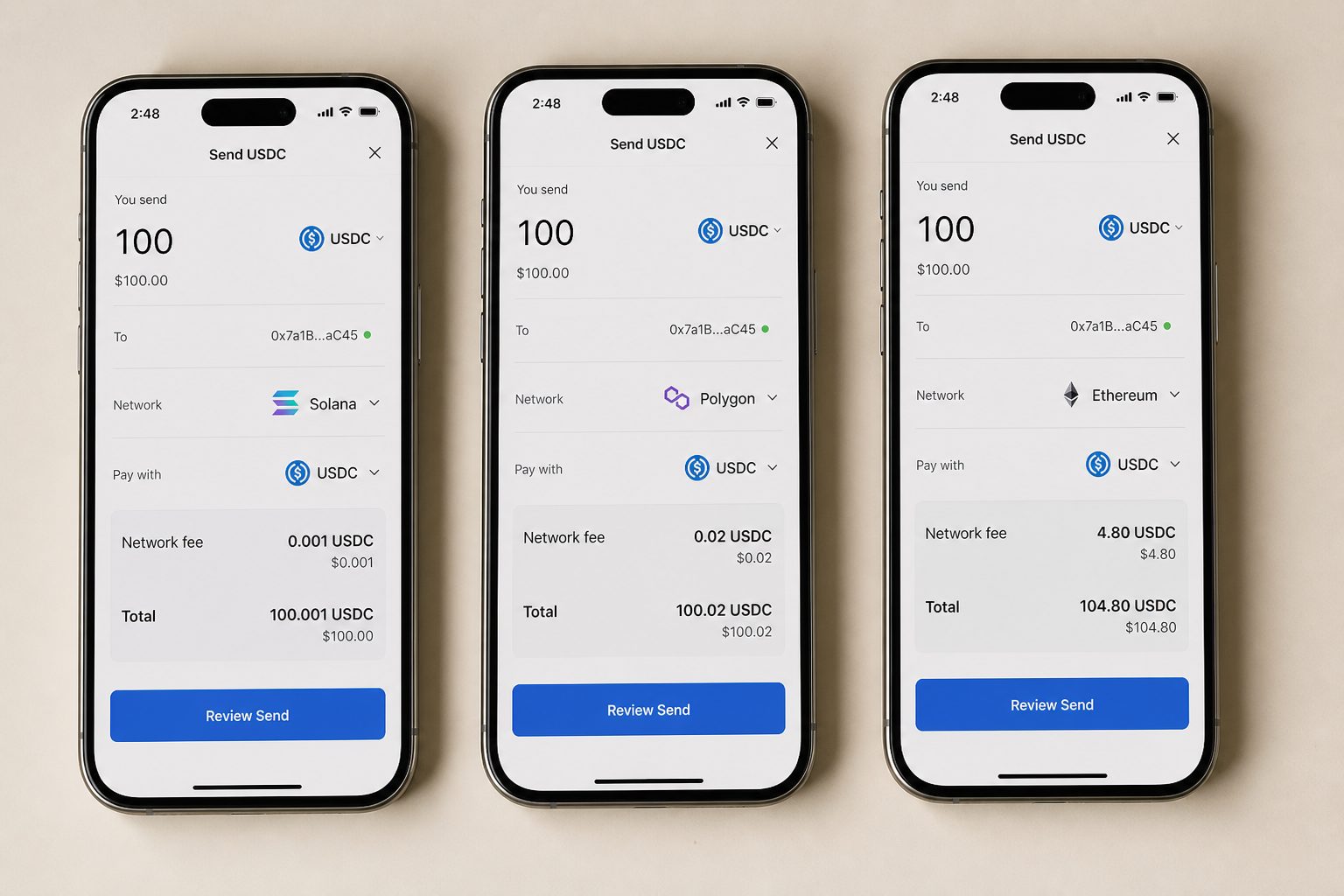
For a small tip, Solana and Polygon both cost a fraction of a cent to send. Ethereum's main network works too, but it usually costs more, sometimes a lot more, depending on how busy the chain is that day.
what a small tip actually costs right now
I pulled live numbers in the first week of August 2026 rather than guessing. On Ethereum mainnet, gas was sitting around 0.5 gwei, and with ETH trading near $1,906, that works out to roughly $0.02 for a plain ETH transfer and closer to $0.06 or $0.07 for a USDC transfer, since moving a token costs more gas than moving the native coin. On Solana, the average non-vote transaction fee was about 0.000081 SOL, which at a SOL price near $73 comes to just over half a cent. On Polygon, the gas tracker showed a standard token transfer costing about $0.001, a tenth of a cent, because Polygon's gas is priced in POL, a token trading under $0.08.
| Network | Typical fee for a small tip (Aug 2026 snapshot) | Speed | Stablecoin used for tips |
|---|---|---|---|
| Ethereum mainnet | About $0.02 to $0.07 on a quiet day, climbing to several dollars when the network is congested | About 12 seconds per block; full settlement takes minutes, not seconds | USDC and USDT, both widely supported |
| Solana | Roughly half a cent on average, more during heavy trading activity | Sub second block times; transactions are usually confirmed within a couple of seconds | USDC is the default; USDT also circulates |
| Polygon | About a tenth of a cent for a standard transfer | Around two second blocks, with recent upgrades aimed at faster, more consistent finality | USDC (native) and USDT |
fees move, they don't sit still
None of the numbers above are fixed. Ethereum's fee history makes that obvious: during heavy demand (NFT launches, token migrations, big liquidations) gas prices have spiked to levels where a simple transfer cost several dollars, sometimes worse. The 0.5 gwei snapshot above sits near the low end of what Ethereum charges, not a promise of what you'll pay next month. Solana's fees stay more stable day to day, but priority fees still climb when a popular launch or a bot war floods one part of the chain. Polygon has stayed cheap for years mostly because its gas token trades at a fraction of a cent, so even a jump in gwei terms barely moves the dollar cost.
speed matters as much as price for a tip
A tip that costs nothing but takes ten minutes to show up isn't much of a tip. Solana's slot time already sits well under a second, and its core developers pushed an even faster 350 millisecond slot time to devnet and testnet this year, alongside a 66 percent increase to mainnet block capacity in July 2026, both aimed at keeping fees low as usage grows. Polygon's blocks land roughly every two seconds, and the network's Ithaca upgrade at the end of July 2026 was pitched by Polygon itself as pushing toward 5,000 payments per second with steadier finality, though that's Polygon's own framing and worth treating as a target rather than a guarantee. Ethereum is the slowest of the three at the base layer: blocks land roughly every 12 seconds, and what most people consider full finality takes minutes rather than seconds. That doesn't make Ethereum unusable for tips, it just means whoever's tipping you waits longer and, on a bad day, pays more for it.
why the choice isn't really yours alone
If you're setting up a way for fans to tip you directly, the tip jar generator lets you paste your own address and pick the network yourself, since it's non-custodial and never touches your funds. But a growing share of creator money arrives on rails someone else already chose. Meta's USDC payouts to creators run through Stripe on Polygon and Solana, not Ethereum, which is a decent signal about which two networks a major payment processor judged cheap and fast enough for routine payouts. The same trade-offs show up on the other side of this site's coverage: if you're weighing whether to charge AI crawlers for access to your content, the x402 standard behind that system is built to work across Solana and EVM-compatible chains including Polygon, so everything above applies there too.
One limitation worth stating plainly: everything above is a snapshot from a single week in August 2026. Gas prices, token prices, and network conditions shift fast enough that the fee you actually pay when a tip lands could sit well outside these ranges, and no page written today can promise you otherwise.
Quick answers
- Which network is cheapest for small USDC tips?
- Solana is typically a fraction of a cent. Polygon is usually around a cent. Ethereum mainnet can cost several dollars.
- Does the address look the same?
- Solana addresses do not start with 0x. Polygon and Ethereum share the 0x format, which is why wrong-chain sends happen.
- What do Meta payouts use?
- Public statements have pointed at Polygon and Solana for USDC, not Ethereum mainnet.