Self-custody vs an exchange for creator payouts
Updated September 2026
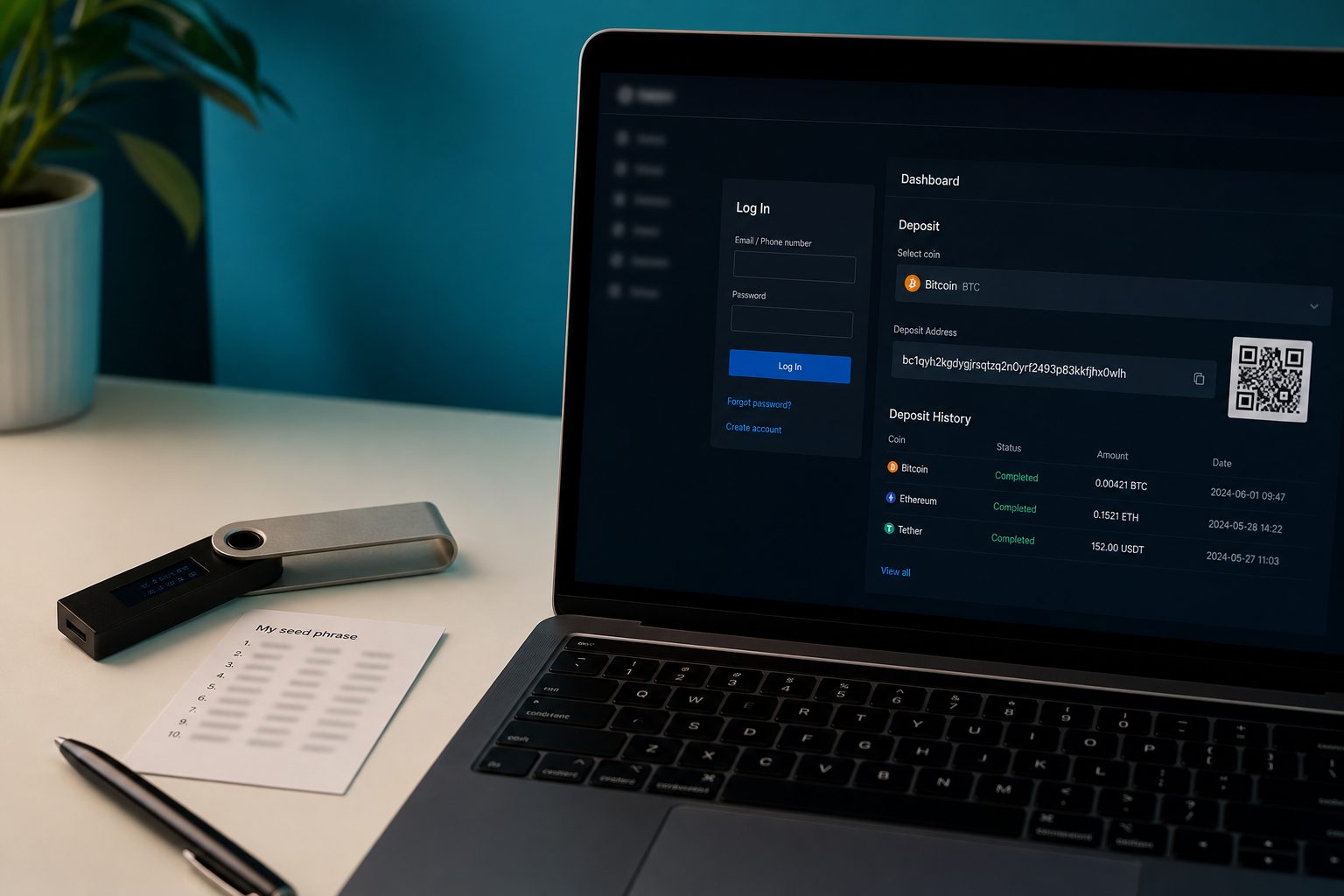
Creators mix these up because both things are called a wallet. One is an app that holds keys on your phone. The other is a login at a company that holds the keys for you. A public tip jar wants the first. Getting paid in local currency usually wants the second, later, in private.
Two jobs
| Self-custody wallet | Exchange account | |
|---|---|---|
| Who can freeze it | Mostly you, plus anyone who gets the seed | The company, a court, or a compliance hold |
| Password reset | No | Yes, like email |
| Good as a public QR | Yes, if the address stays stable | No. Deposit addresses rotate and often need a memo |
| Good for cash-out | Not by itself | Yes, once you withdraw from your own wallet into it |
What self-custody is for
A tip jar on Twitch, YouTube, TikTok, or a blog is a public address. You want one that does not change when the company redesigns deposits. That is a wallet you control. The generator on this site only encodes that address. It never holds the money. Pick the app for the network you are going to label.
Platform payouts are a slightly different story. Meta's USDC payouts run through Stripe. You still need a destination that can receive USDC on the network they send. Do not paste an address you do not understand just because a form asked for one.
What an exchange is for
Selling USDC for pounds, pesos, or naira is what exchanges and some payment apps are built to do. You send from your own wallet to a deposit you create that day, on the network the deposit screen names, then you sell and withdraw to a bank. That flow is in how to cash out USDC. The exchange is a door, not the jar on the street.
KYC, withdrawal limits, and sudden holds are the trade. If your whole public tip stream points at an exchange and that account gets reviewed, the QR on your channel becomes a dead letter until you reprint it.
The seed phrase
Twelve or twenty-four words are the wallet. Screenshots, cloud photos, and “support” chats that ask for them are how people lose a year of tips in an afternoon. Write the words on paper. Do not type them into a website that offered to “verify your tip jar.” That class of trick is on the scams page.
This is general information, not financial advice. If you lose a seed phrase, nobody here can get the funds back. If an exchange freezes an account, that is their process, not a blockchain bug.
Quick answers
- Should a public tip jar be self-custody or an exchange?
- Self-custody. An exchange is for cashing out later, in private, not for a QR that sits on a channel.
- What is the difference?
- Self-custody means you hold the keys. An exchange holds them for you and can freeze the account.
- What about the seed phrase?
- Those 12 or 24 words are the wallet. Do not screenshot them or type them into a 'support' site.